Peace, Quiet, Buzzards and “Heritage”

After the hustle and bustle of the Llangollen Canal, and Ellesmere  gift shopping, we’d set our sights on a few days peace and quiet on the Montgomery Canal, which heads for eight (navigable) miles down from Frankton locks. Due to a nasty outbreak of great crested newts, the nature conservation people’s rule is strong, and there are significant restrictions on the number of boats.

Assuming you can actually get through to CaRT – a miracle in itself – passage has to be booked through Frankton Locks in advance, and you have to transit between 12:00 and 14:00, so we left Ellesmere on Thursday morning after another quick whizz around Tesco (the Montgomery’s a bit remote), expecting to get to the top lock just after the initial 12:00 rush. The third trip back along this by now familiar section this year passed smoothly enough, and we arrived at Frankton about 12:45 only to find a large queue of boats. Oh well – lunch on the hoof again, holding the boat on a rope!

Once down the four Frankton locks (the first two are a staircase) and past the Western arm – a favourite mooring spot – the other traffic had seemed to vanish. We suspect most people just belt down to Queen’s Head, have a late lunch or early dinner at The Queen’s Head pub, then head back again. Fools. We pottered gently down a delightfully rural canal with lovely views across the countryside, and moored up at Perry Aqueduct – a favourite mooring spot of ours. There’s only room for one boat either side, and we had the place to ourselves.

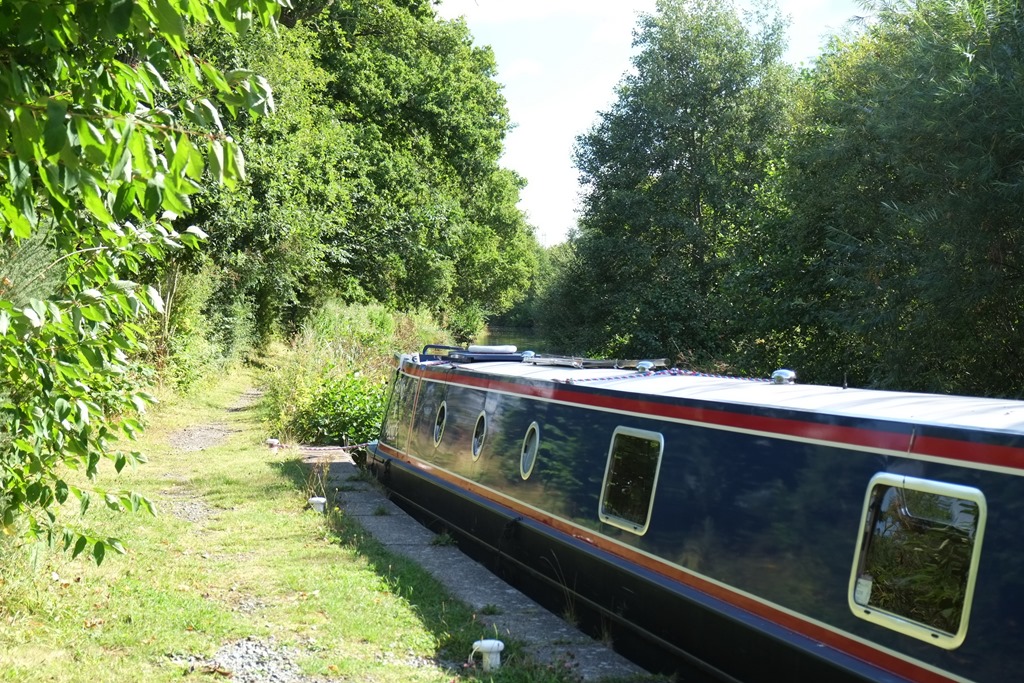
Perry Aqueduct mooringPerry Aqueduct mooringPerry Aqueduct

Friday morning, and the sun was shining, so some bramble picking was called for before setting off for Queen’s Head. It’s not all that long since Queen’s Head was the limit of navigation, but you can go a bit further these days. Stopping for lunch, we decided the moorings – next to two busy roads – were a bit too busy for the Captain, and headed off again. One of the roads leads back to what was once Rednal Aerodrome (now an industrial estate, we think),  and on an earlier exploration by road to see if the runway looked useable (some years ago), we counted 17 buzzards riding the sunny day thermals over the tarmac; it’s still seemingly a feature of this stretch of canal that one is never out of sight or earshot of a buzzard or three.

Approaching Aston Locks it was clear that there was a volunteer working party painting everything in sight. With wet paint everywhere, we graciously allowed them to work the locks for us.

Painting Party - Aston LocksPainting Party - Aston Locks

They were painting everything black and white, just like the Llangollen Branch of the Shropshire Union, so we asked the chap in charge if he knew why the Shropshire Union Main Line balance beams were painted grey. Apparently our wild speculation wasn’t that wide of the mark. During the war, the canal company ran out of black paint, and their sister railway company had a serious excess of grey paint, so they “borrowed” that. There was so much that by the time supplies actually ran out it had already become a “tradition. It’s now part of the canal’s “heritage”, and they have to keep painting it grey.

Not far beyond Aston Locks one comes to Maesbury Marsh: a much quieter spot to pass a day or two.
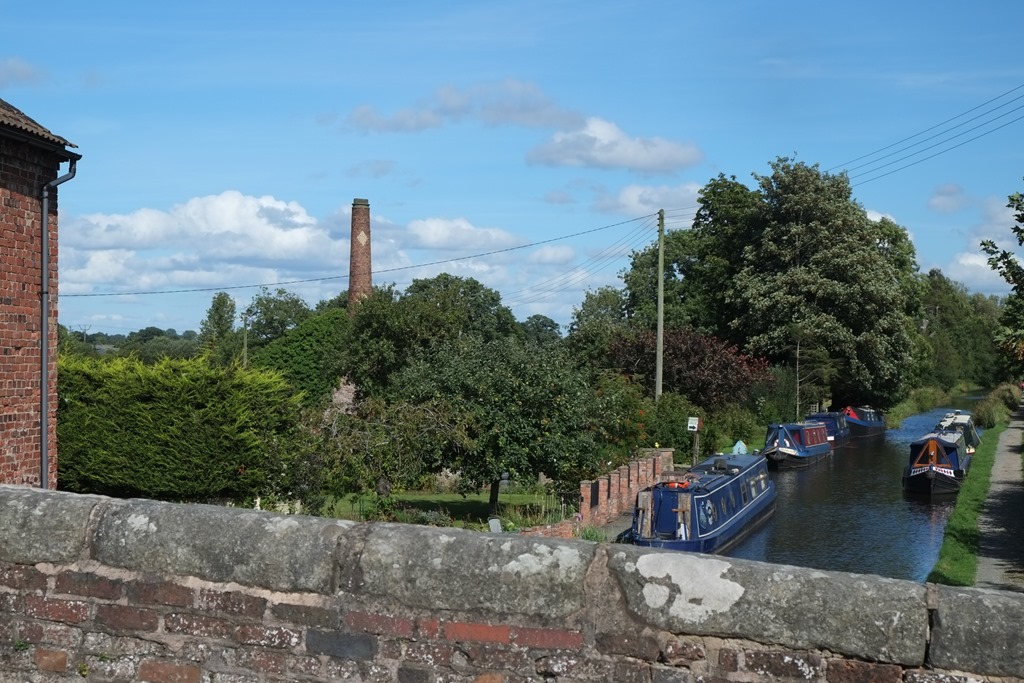
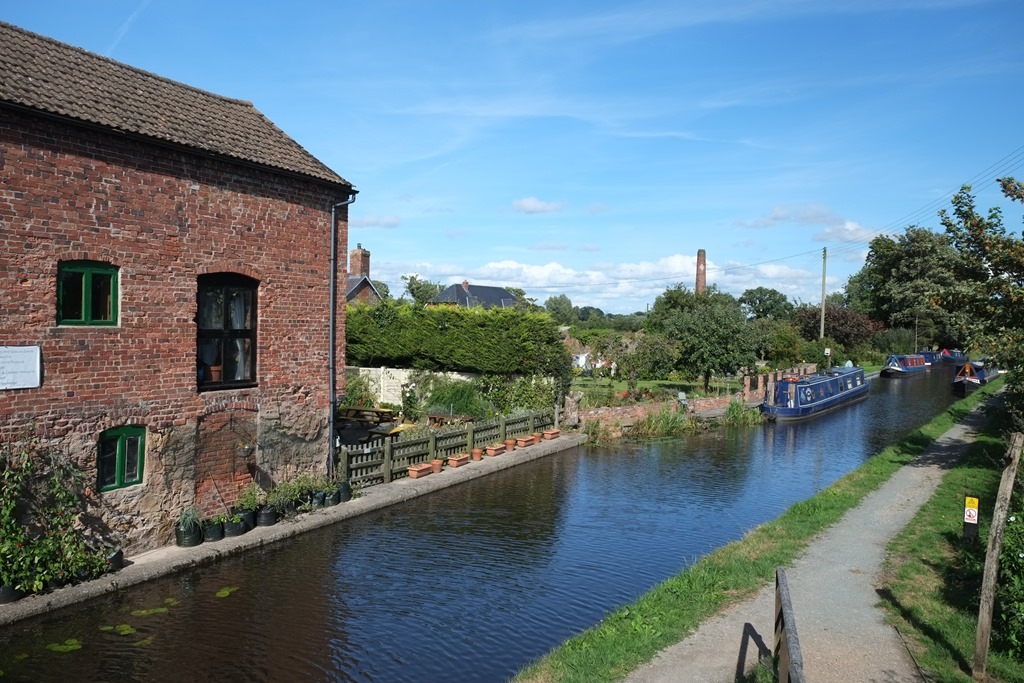
Maesbury MarshMaesbury MarshMaesbury Marsh

The old warehouse on the wharf is now The Navigation Inn and proved to be a fine homely and welcoming local pub, as well as a splendid spot for a piggy dinner. Or rather a cow dinner – a very nice steak.

An Ellesmere Sojourn

Leaving Wales on the Sunday morning via Chirk Aqueduct, we had a pleasant meander back over familiar territory.

Chirk ViaductEngland

No delays at St. Martins, and reasonable weather, and by Monday afternoon we were toddling into Ellesmere Arm for a quick visit to Tesco, before nipping round the corner (boat-wise) to Blackwater Marina, ready for the engineer to do his oil changing thing on Tuesday morning. With Song & Dance tucked up on the service quay, plugged in to the mains, and Sir happy with the nearby holiday flat garden to explore, we took local advice and toddled down to the new Greek Restaurant Meze, which was indeed most excellent.

A warm sunny Tuesday in a marina must mean doing the laundry (oh the glamour). For various reasons our engineer chappy didn’t finish until mid-afternoon, and so having thoroughly fed, waterered, dieseled and emptied Song & Dance, and dried all the washing in their tumble dryer, we set sail for a long haul cruise back around the corner into the Ellesmere Arm, where the Captain was beginning to feel right at home.

We were going to head down the Montgomery canal after all the boat servicing stuff, and you need to book a passage through Frankton Locks, so we decided to stay another day and chill out before heading out into the fray again. And so Wednesday was spent pottering around the town and the mere, shopping for some birthday presents and so on.

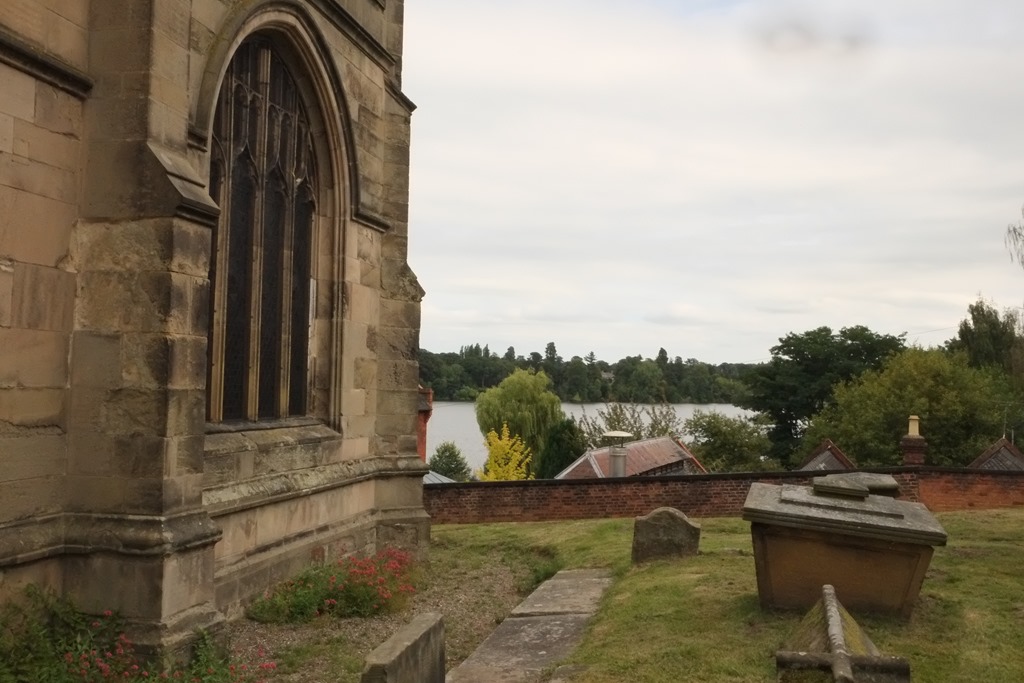
EllesmereEllesmere Churchyard

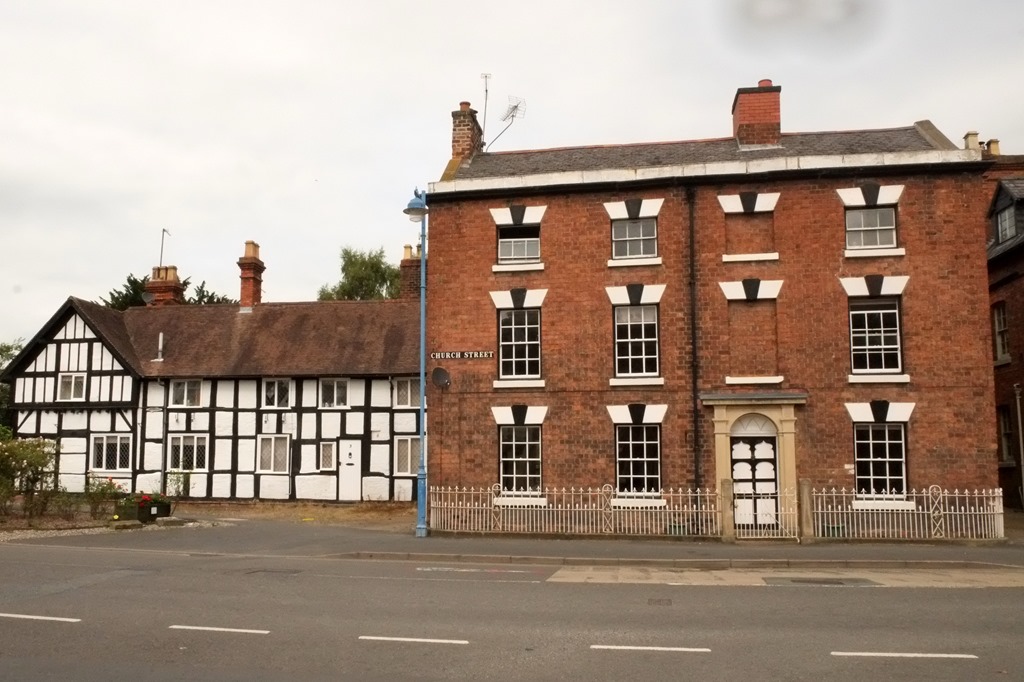
There are plenty of nice houses in Ellesmere,

DSCF5113Ellesmere Churchyard

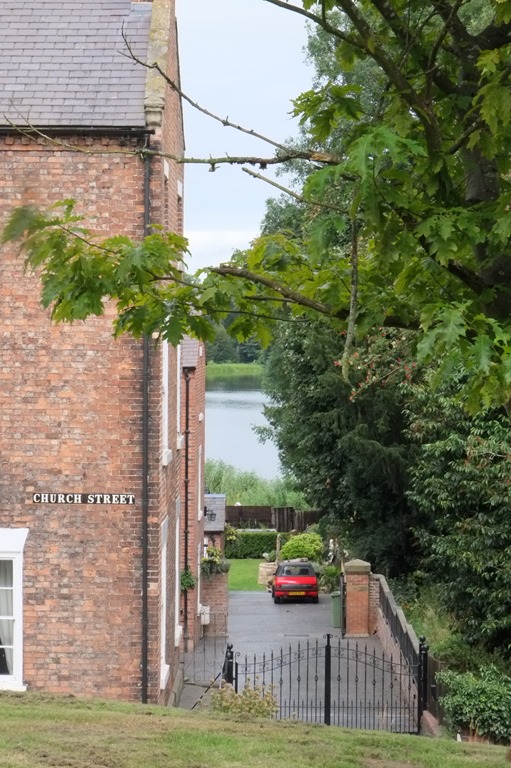
the church overlooks the Mere, and down near the water, something stirred.

Buzz OffEllesmere Church from the Mere

One Tuesdays and Wednesdays, the local Indian Restaurant was offering a Starter, Main Course, Rice or Nan or Chips and a fizzy drink for a tenner, so it hardly seemed worth cooking, and for £20 for the two of us the food eminently acceptable. We’ll be returning to Ellesmere again in a week or so: we suspect there’ll be a repeat engagement!

A Worthwhile Welsh Wet Weekend

Bleary eyed Friday morning proved to be a washout. It had started raining early in the morning, making a change from the duck serenade noises, and was forecast to be wet and wild all day, with a slight possibility of a clearance late afternoon. A steam train trip further into the mountains didn’t seem like a good idea, and most of the day was written off to chores around the boat. The clearance never really came until much later – a shame, because you can only moor in Llangollen for a maximum of two nights.

Saturday proved a little less wet and wild, and with Liam Heath paddling solo at lunchtime, we returned to Gales Wine Bar for some fortification, and found someone with a shiny iPad and WiFi connection who let us watch Liam going for gold. Another celebratory lunch, a visit to the next door wine shop for some more Lebanese goodies, and it was mid afternoon before we got back to the boat. We needed to get clear of Llangollen for the night, and there’s almost nowhere to moor between Llangollen and Froncysyllte, so it looked we’d be cruising well into the evening, and hoped Sir would forgive us.

And so it proved. A tortuously slow run down to Trevor Basin, with the predicted hordes heading up to Llangollen for the weekend – it would have been quicker to walk. And then a long wait because there was still a never ending stream of boats coming across The Great Unpronounceable: in the end the Head Gardener had to walk across to the other side and say “Whoa!”, so we could get across. Most of the traffic seemed to be intent on getting to Llangollen that evening: we were seriously beginning to wonder where they thought they were going to moor as we’d left an almost full basin there. Still, SEP as Douglas Adams might say.

And we finally made it back to the Biggles Jump Off spot in Froncysyllte, for a light dinner and an early night. This boating is supposed to be relaxing! Still, a worthwhile visit – think we might have to come back by surface transport and stay for a few days in Gales Hotel: a hotel with the reception in an upmarket wine shop has to be good.

Shut The Duck Up

Determined to celebrate Liam Heath & Jon Schofield’s Silver Medal in the kayaking thing (Liam’s Mum & Dad are good friends of several decades standing), and also to raise a glass to a some very dear friends who had just lost a parent we both knew well, it was probably a mistake to wander into an establishment that (a) butchered and hung their own 28 day beef, (b) had a charming boss man that looked just like a young Ian A Anderson (another dear friend of …), (c) clotted their own cream and (d) had a large back catalogue of Chateau Musar vintages.

After a thoroughly decadent meal at Gales Wine Bar cum Hotel cum Wine Shop cum whatever, including a splendid bottle of Chateau Musar (a favourite world-class wine from the Bekaa Valley in Lebanon), we retired somewhat the worse for wear financially for a well deserved night’s sleep.

Unfortunately, the Llangollen Basin is home to an irascible flock of ducks who quack and squawk and fight loudly pretty much all night long. When they do stop quacking, it’s because they are also the kind of ducks that like nibbling at the green algae that inevitably forms along the boat’s waterline. The aquatic pecking sounds like a very quiet pneumatic drill, or someone tapping their fingers quietly on the table, just inches from your head, and is nigh on impossible to ignore. There’s nothing like a good night’s sleep…

A Llangollen Afternoon

With the early-ish start from Froncysyllte, we’d actually made Llangollen in time for an afternoon wander, even though the 6 miles and no locks took three hours – slow going. The walk down to the town from the basin is full of interest…

Llangollen Wharf

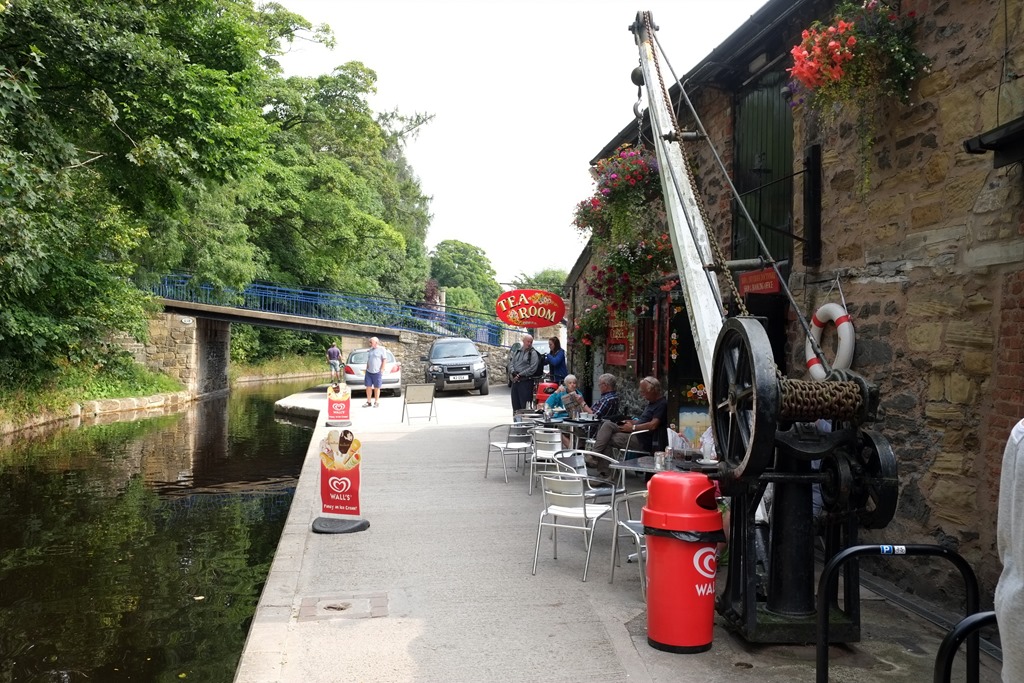
The road descends steeply across the canal. You can carry on round some tight and steep bends, and end up on the main road at an amazing taxidermy workshop. Or you can drop down to Llangollen Wharf, where there’s ice cream, teas, and a chance to say hello to Taffy, who pulls the horse-drawn trip boat up to Horseshoe Falls. Then some steep steps down onto the same road.

Llangollen WharfTaffy

Either way you end up the station, and the bridge over the River Dee.

Llangollen StationLlangollen Station & River Dee

With steam engines running every day during the summer, and a cafe on the platform, the station’s a busy spot. It’s a lovely line, climbing up further into the mountains, and we’d had a lovely day trip some years previously. They’ve extended it a little further, but it was a bit late in the afternoon to investigate this – we’d have had to take the last train out and come straight back – so decided to maybe go on an expedition on Saturday.

Committee Meeting?5199Llangollen Station

The crew seemed to be having some kind of committee meeting over the couplings, but the train eventually departed.

More CeilingsRiver Dee

Walking along the river we noticed a family of young rats whizzing in and out of the rocks below the promenade railings. You’re never very far from a rat, but it’s not often you see them so boldly visible when lots of people are around.

As St. Collen’s church here is also noted for its carved ceiling and hammer beamed roof, we thought we’d better continue our exploration of such items even though we were now definitely in Wales. Then a wander back through town, spotting likely places for an evening meal off the boat. There are worse ways to spend a warm if dull Friday afternoon.

Across the Stream in the Sky

Until the Captain had decided for us, we’d originally planned to overnight in Froncysyllte (or Fron as it is popularly known). Having failed to do that, we’d toyed with the idea of walking down and visiting the well know Aqueduct Inn for some evening refreshment, but in the end decided not to. Shortly after setting off again on a gloomy Thursday morning, it was clear that the pub had been painted a particularly lurid yellow colour that would doubtless have hurt the eyes on a sunny evening!

FroncysyllteFroncysyllte

It was also clear that there was quite a queue to cross Pontcysyllte Aqueduct but we snuck on the end of a convoy without too much trouble. Apart from the name (a tautology,  as Pontcysyllte pretty much means Cysyllte Bridge), this amazing construction is rightly a world heritage site. We’ve crossed it numerous times over the years, and it’s always a thrill, whatever the weather, and no matter how busy. And if you want an interesting exercise, and have mastered the spelling of Pontcysyllte, try and find two people who agree on the pronunciation…

Pontcysyllte Aqueduct

Heading upstream against the flow is slow going, and there’s little to stop the driver, invariably on the left, from getting a nasty dose of vertigo: there’s no Elf ‘n Safety stuff at all. Also it’s a bit like steering through a narrow tunnel that’s lost its roof: just as difficult.

Pontcysyllte AqueductPontcysyllte Aqueduct

If you don’t suffer, it’s a good place to watch the local footy team, but the Chief Cook was steering and determined not to look down.

Pontcysyllte AqueductHead Gardner not looking down

Across the other side is Trevor Basin: always a busy nightmare as there’s a narrowboat and day-boat hire base, someone running horse drawn tourist cruises, the hire boaters not going on to Llangollen trying to turn round and go back again, loads of gongoozlers etc. etc. And a very tight turn under a narrow bridge onto the Llangollen arm that most hire boaters take several crashes to negotiate.

Originally just a water feeder, the navigable channel from Trevor to Llangollen is very narrow and shallow with a consequently strong flow, and contours along the side of the spectacular Dee Valley. There are several sections where only one boat can pass, and you can’t see the far end from the start, so the wise boater sends an advance party off on foot with some kind of mobile communication. The unwise can end up reversing a long way…

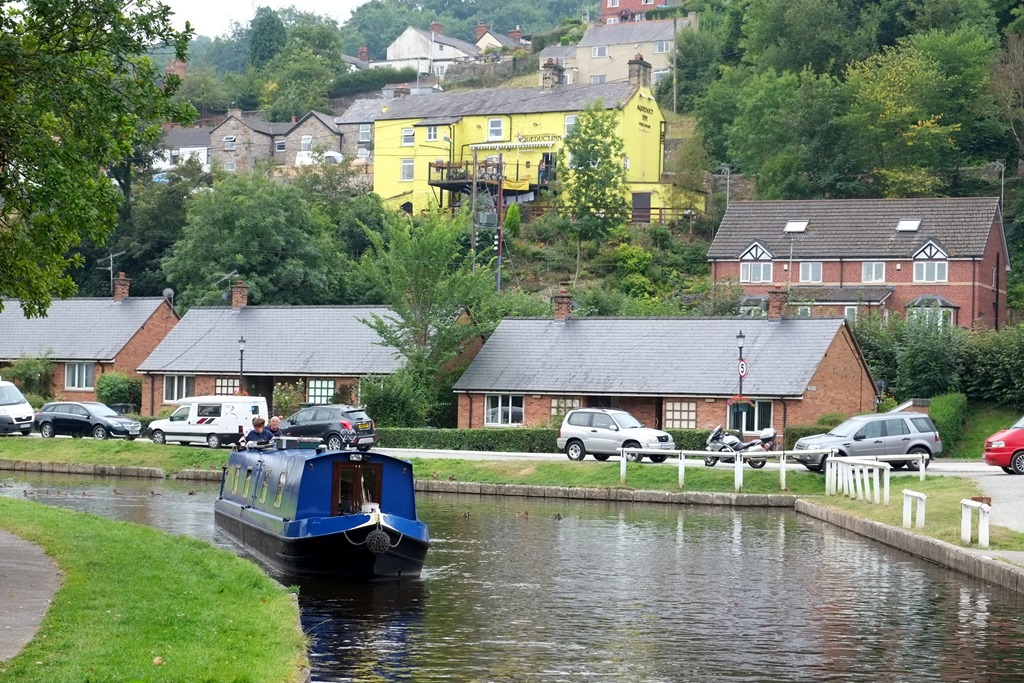
Llangollen BasinLlangollen Basin

Getting through the final narrow stretch high above the town, there’s a pleasant basin surrounded by the mountains to moor up in, completed with electrics, and tying up there gives quite a sense of achievement. It’s five minutes downhill to the town, and the basin overlooks the Eisteddfod festival site (that’s the permanent marquee in the first picture).

With Song & Dance put to bed, and wired up (good for the batteries), it was time for an afternoon snack…

Paddling Upstream to Llangollen

Most canals are fairly static when it comes to water. Water is poured into the summit pound (and, sometimes elsewhere) to replace that “lost” when passing through a lock. As water is frequently scarce, this is the reason that emptying a full lock or filling a empty lock unnecessarily (e.g. when you’re above an empty lock, and someone is approaching from below but still a few minutes off) is considered very poor form. If you’re moored up on most canals, there is a modest movement of water in the general direction of “downhill”, but not enough to be of any real concern.

However, the Llangollen canal is used to as a feeder to transport water from the Welsh mountains in the Cerriog Valley above Llangollen at Horseshoe Falls, down to a large reservoir at Hurlestone Junction, from where it goes on to Manchester (or somewhere!).

Horseshoe Falls

(This picture of Horseshoe Falls, technically the start of the canal, was taken on an earlier visit in 2007).

This transporting of water means there is a considerable flow down the Llangollen Canal at all times, making it more like a river. There are two significant effects resulting from this. Firstly, each lock has a large by-wash channel which carries water down around the lock when boats are not moving through – a bit a weir on a river. For some reason here, these inevitably enter and exit the main channel just above and below the lock gates (unlike most river locks, which give you much more room), and cause major cross currents just by the lock itself. Just what you need when you’re trying to slot a 58 ft by 6ft 8in boat into a 72 ft by 7 ft brick slot without crashing into anything and destroying all the crockery.

The second effect is that while the canal is relatively wide and deep, the flow is fairly negligible, but when the canal narrows, Bernoulli’s principle means that the flow speeds up considerably. The canal narrows at every bridge hole, sometimes to little more than the width of the boat, and heading up stream you suddenly find yourself going nowhere, halfway under a bridge. And when you finally pop out the other side, the boat suddenly surges forward again.

It’s even worse in long narrow tunnels like that at Chirk, or in long narrow aqueducts. To keep going upstream, you need a significant amount of power to overcome the downhill flow and keep moving forward against the fast flow, but there’s something called prop walk which tries its hardest to screw the boat around, and in a cramped tunnel it can make it nearly impossible to track straight down the middle without scrubbing the front on one wall and the stern on the other. Deep joy. And scraped paintwork. Guaranteed.

It’s a lot easier going downhill! Or if you must go uphill, use a horse.

Chocolate-less in Chirk

Having originally decided to get to Ellesmere and assess the situation, it subsequently seemed that it was worth making a determined assault on the Llangollen summit. Song & Dance needs an oil change and service fairly shortly, and the marina in Ellesmere can fit us in next Tuesday, so we had just under a week to potter somewhere. A combination of hire boat base turn-round days, and the rumour that many of these hire-boaters were only interested in going as far as The Unpronounceable Viaduct before heading back meant that Friday and Saturday could be reasonable days to tackle the final stretch. And so, bidding Ellesmere farewell for a few days, we set off, having decided to try and get somewhere near Chirk base camp to put us in a good position.

The canal winds around the contours a bit, and the countryside is progressively less flat than the mosses and  meres East of Ellesmere, as one approaches Lower Frankton, Frankton Junction, Welsh Frankton, Welsh Wales and so on. Meandering along the border, Song & Dance seemed to be one of very few boats heading uphill, while there seemed to be a never ending stream of boats coming the other way. The Llangollen Canal was living up to its reputation as the busiest spot on the network.

After some delay getting through the two St. Martins locks (mainly caused by a long queue of boats coming the other way, and a fund raising exercise at one of them, causing some degree of chaos), a late lunch ensued, out in the sticks, with an open view on the towpath side (unusual), and far off vistas of the Welsh Hills mountains.

St. MartinsSt. Martins

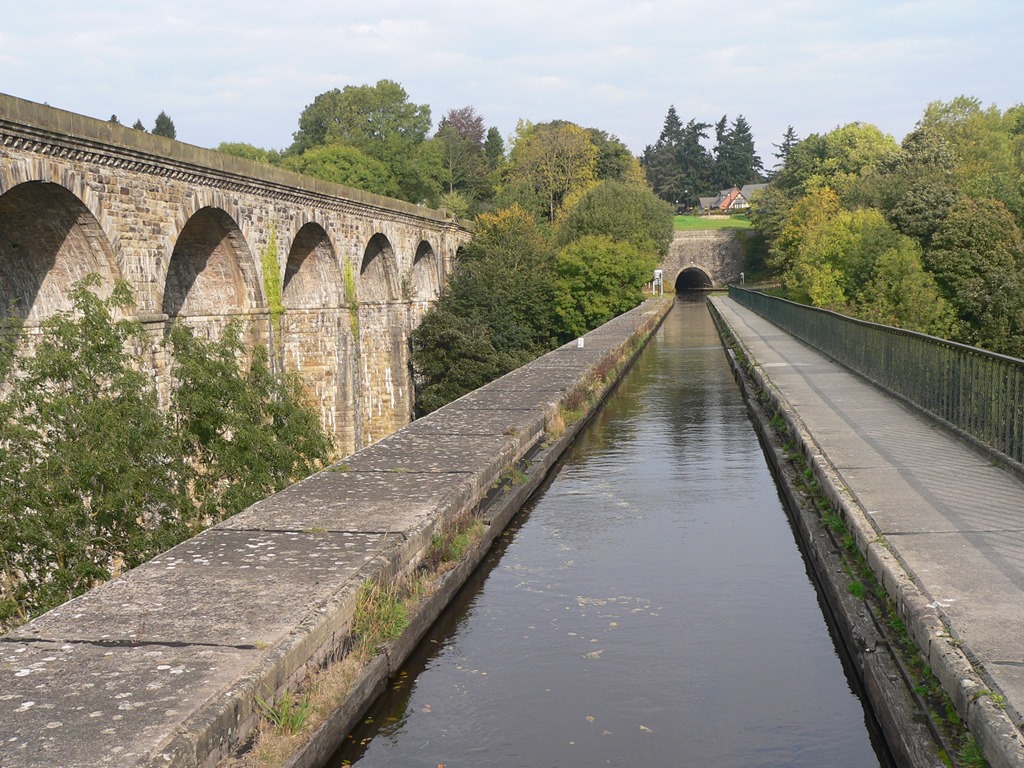
And then fairly quickly you start getting closer and closer to the scenery; at Chirk Bank you suddenly realise you’re on the side of quite a deep valley, before launching across Chirk Aqueduct, which takes you into Wales properly: one minute soaring high above countryside, the next diving underground through Chirk Tunnel. The aqueduct is accompanied by a rather fine railway viaduct.

Chirk AqueductChirk Viaduct

Chirk AqueductChirk

Although not overly long, Chirk Tunnel is always a bit of a challenge – a subject for another post – and one eventually emerges into a long deep cutting by Chirk Station and Chirk Castle. With loads of downstream traffic still milling around the upstream tunnel entrance, we decided not to try and stay at the visitor moorings there, although we knew Chirk well – we had some friends who lived in the nearby village until they passed a few years ago. There’s normally an overpowering smell of hot chocolate along this part of the canal: it passes by a large Cadbury’s chocolate factory, but today, not a whiff!

We knew there were reasonable moorings just before The Great Unpronounceable, but as we approached the nearly unpronounceable Froncysyllte, the Captain announced that he rather liked the view over the steep valley down to the River Dee, and jumped off to explore while further we were still cruising. Fortunately there was a suitable proper job visitor mooring about 100 yards further down, so we called it a day – we called it Wednesday – and retrieving Sir from the woods we settled down for a well earned bottle of the red stuff.

Ferret on a String

From the Duddlestone (Tuesday nights place of repose) to Ellesmere you pass through Whixall Moss, then the Shropshire Lake District. The former is a somewhat odd, if flat, landscape, thinly populated, with a few lift bridges, and largely designated as a Nature Reserve. The canal itself has long straight sections, and isn’t – of itself – very interesting. We’d originally intended to stop and follow one of the Nature Reserve guided walks, but suitable mooring spots are thin on the ground, and we ended up saving it for the return trip.

Further on, the canal skirts a series of lakes. The first one – Cole Mere – is supposedly a good spot for spotting the birds, but is set well below the canal, with a wooded hillside keeping guard. Mooring up for lunch, we wandered across the canal and down on to the mere’s perimeter path, but that was still well back from the water, and the trees prevented us seeing much of anything. Ah well.

Mind you, we did see one thing neither of us had seen before: someone taking their ferret for a walk on a lead. The ferret didn’t seem that keen: it was more a case of taking it for a drag. (Cue remarks about the old “pet rock” joke). Apparently it’s not that uncommon: we’re reliably informed that there was one at Sidmouth during Folk Week, and for many years one in Farnham. You can even get you ferret some fancy haut couture kit…

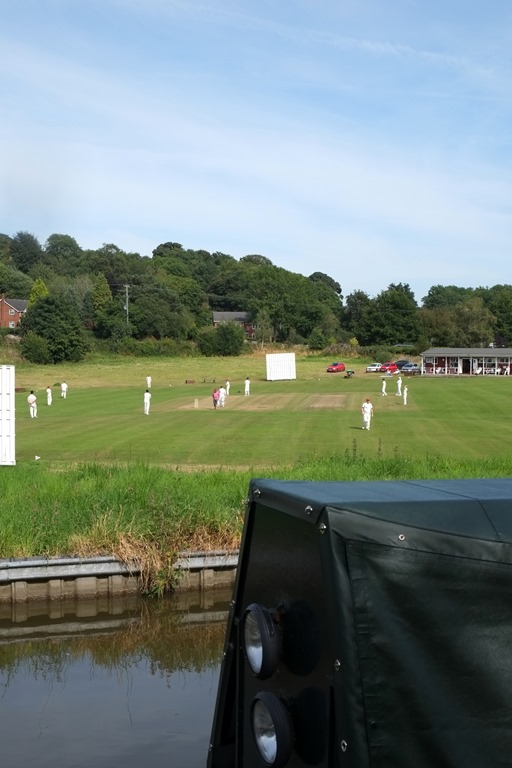
With provisions running short, we decided to abandon the proposed bird bothering walk, and try and make Ellesmere instead. After a pleasant hour’s cruise in improving sunshine, we turned into the Ellesmere Arm and – against all expectations – found the perfect spot half way down. The Captain likes the Ellesmere Arm: cricket club on one side, wide, busy but well behaved and sociable towpath so that dog walkers can be seen from afar, and a nice open wood/hedgerow bordering it, to explore and hide in.

Ellesmere Cricket ClubEllesmere Cricket Club

The staff like the Ellesmere Arm because as well as being an amenable spot to pass the night, it’s within trolley pushing/borrowing distance from a large supermarket, and five minutes walk to a pleasant market town High Street, with a decent selection of shops, restaurants and pubs to choose from.

That said, a restaurant we’d previously favoured, down in the cellars below a building in the main square, was now an oddball church. God works in mysterious ways.

Grinding Through Grindley

Leaving Wrenbury on the Monday morning, the main challenge was the Grindley Brook Locks. Heading upstream, there are three locks in a flight very close to each other, followed by a three chamber staircase. Queues here are legendary, and a three up three down regime normally enforced through the staircase: on a bad day, six hours delay has been quoted. It seemed as though the resident lockkeeper’s main role was that of refereeing the punch-ups between those near the front of the queue, and arriving hire boat crews who had misjudged and were now going to be late getting back to their base (which is expensive).

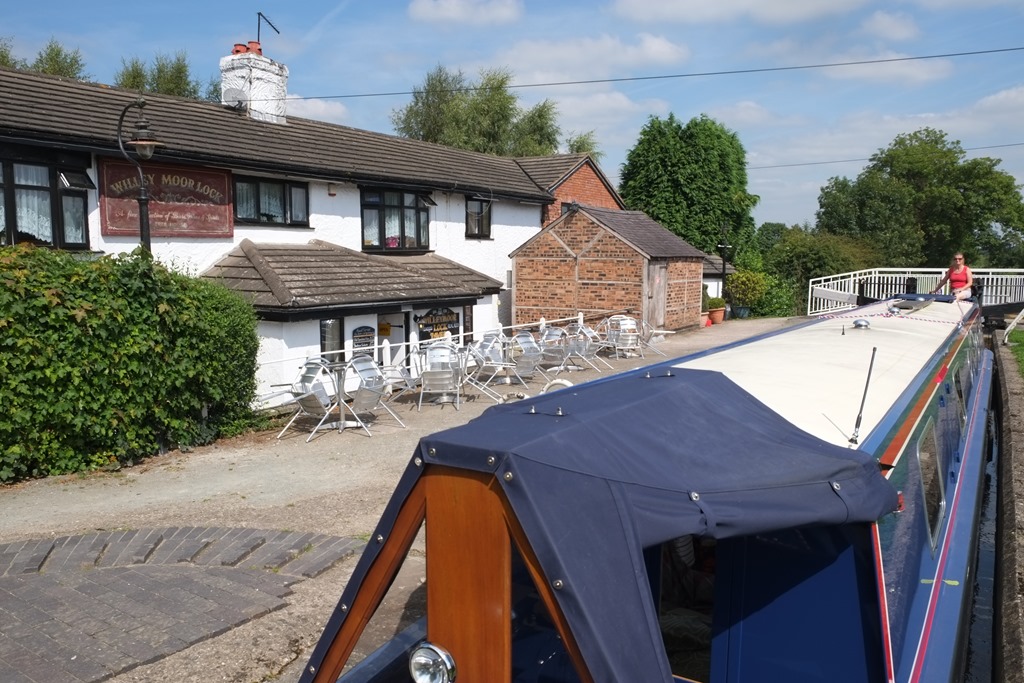
Willey Moor LockWilley Moor Lock

But first, passing through Willey Moor Lock, it seemed rude not to moor up and partake of their beer and sandwiches for lunch.

Arriving at Grindley Brook mid afternoon, there was virtually no one around apart from gongoozlers in the the tea shop! Working the three single locks ourselves we met one boat coming down, then with the lockkeeper setting up the staircase for us, we covered all the six chambers in about 40 minutes. Something of a record, we reckon.

Grindley Brook StaircaseGrindley Brook Staircase

Grindley Brook Staircase

The lockkeeper said that Thursdays used to be the really bad day, but one of the canal guides mentioned this in a recent edition, following which some of the traffic now makes an effort to get through on the Wednesday. So now both days are busy and best avoided. Ho hum. Mind you, the hire fleets now spread out their turnaround days and have short break packages, so boats start out on three or four different days during the week, rather than just everyone departing on a manic Saturday afternoon for a week’s cruise, as once used to be the case.

Skirting and eschewing the delights of Whitchurch town (the sun was getting seriously past the yard-arm), once back out in the countryside, we moored up rather pleased at our progress, given the circumstances.