Category Archives: General

A Mite Uncomfortable in Stoke Bruerne

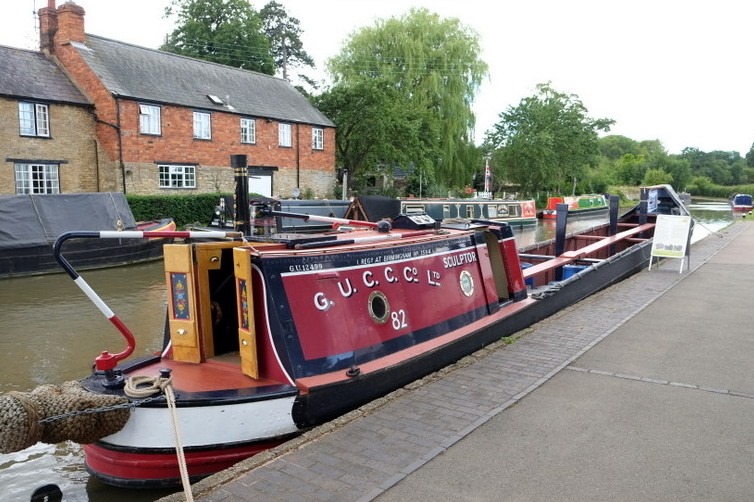
Stoke BruerneStoke Bruerne - Sculptor

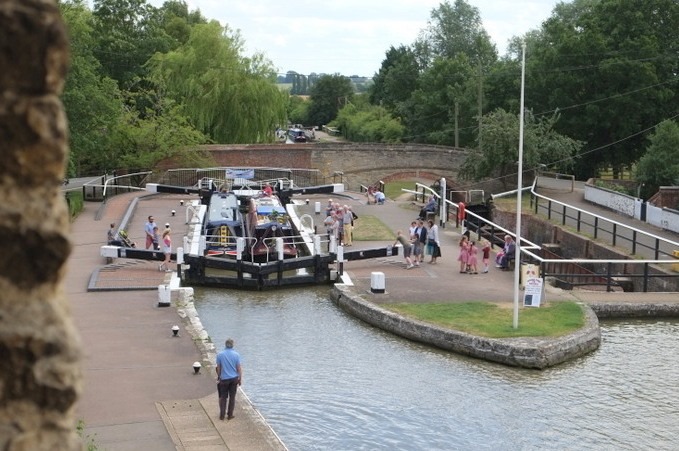
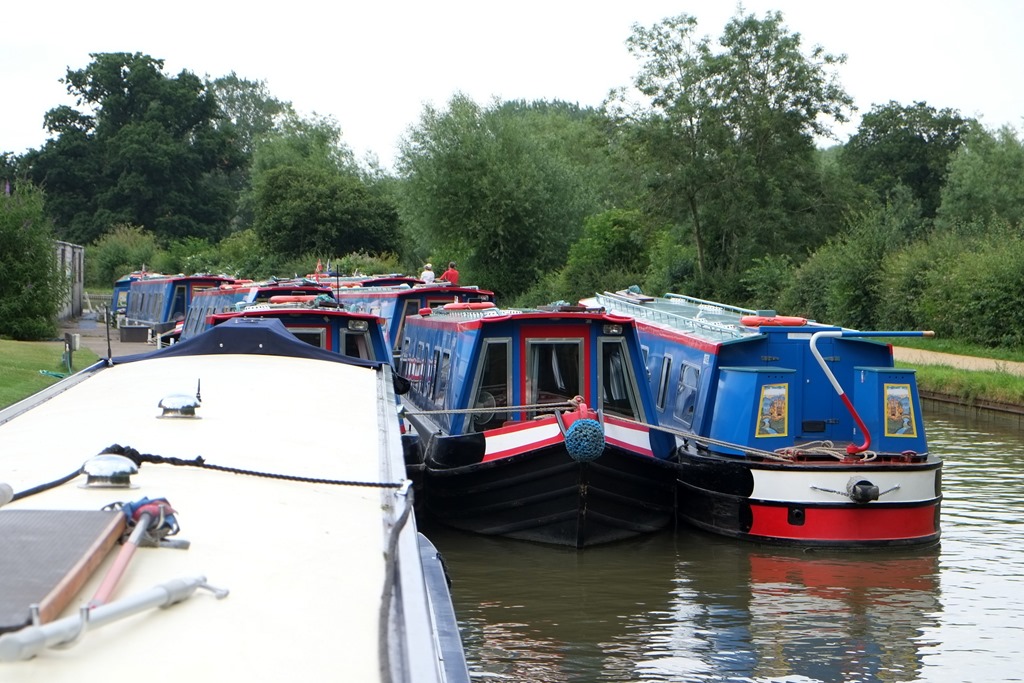
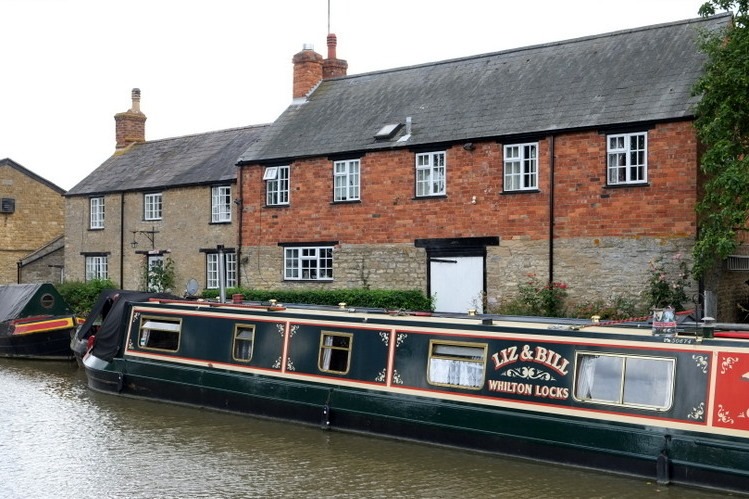
Stoke Bruerne is supposedly the archetypal “canal village”, and with decent pubs and restaurants, busy locks and a Canal Museum it is unsurprisingly busy. The morning weather was forecast to improve, so we locked up the seven lock Stoke Bruerne flight in company with an ex Naval Engineer and serious long distance walker plus his lady friend from San Francisco on an old boat, and moored right at the top in time for lunch, where it proceeded to get busy.

The Captain was duly examined again, and although bathing his scratches had helped, the inside of his ears were starting to look as though he was suffering an infestation of ear mites. He was clearly a bit uncomfortable, but didn’t seem too bothered, and the nearest vets were in Towcester and Northampton, both a significant taxi trip away, so procrastination was the order of the day.
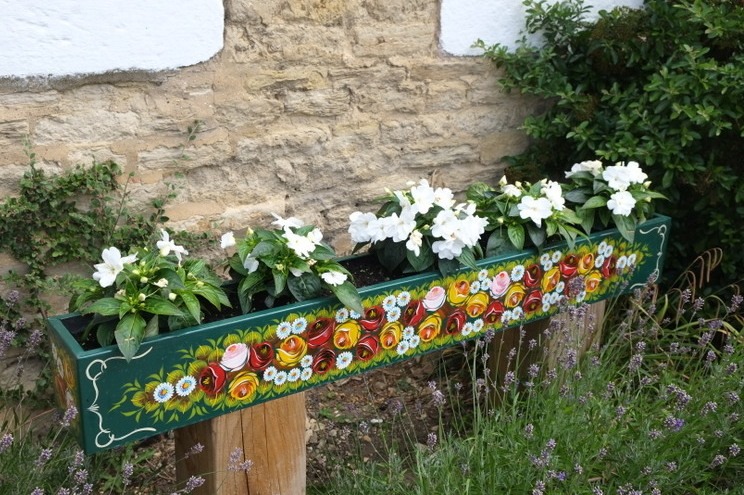
Stoke BruerneStoke Bruerne

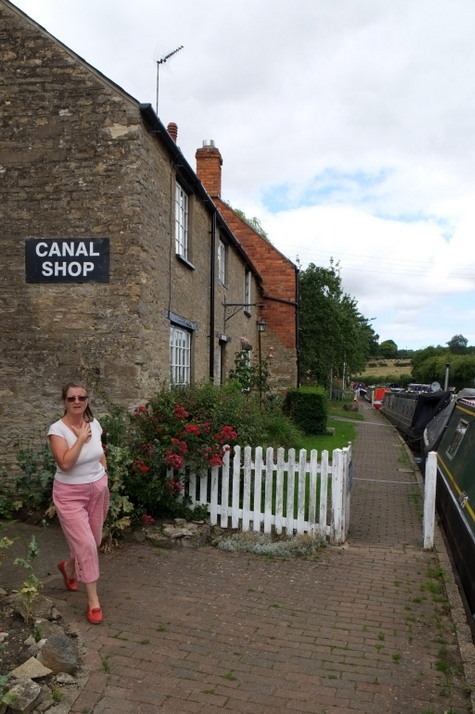
Fortunately for the purser, the Canal Shop was closed for some reason. Let’s face it, we didn’t really need any Rosie and Jim knitted toys.
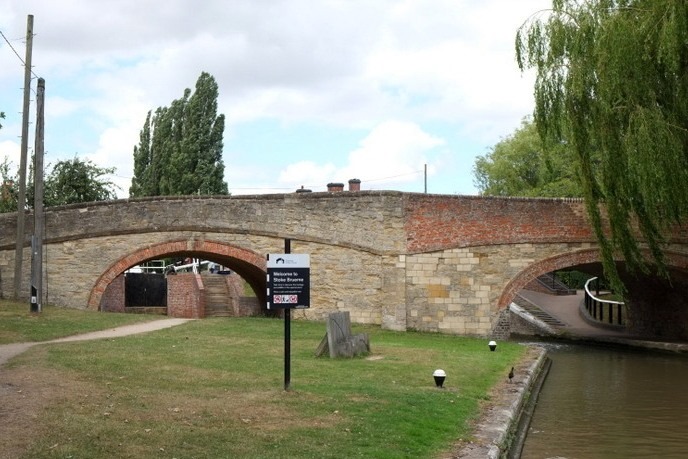
Stoke Bruerne - Double LocksStoke Bruerne - Narrow Lock

As well as the extra bridge hole. the narrow “second” top lock still exists, although it’s not in use.
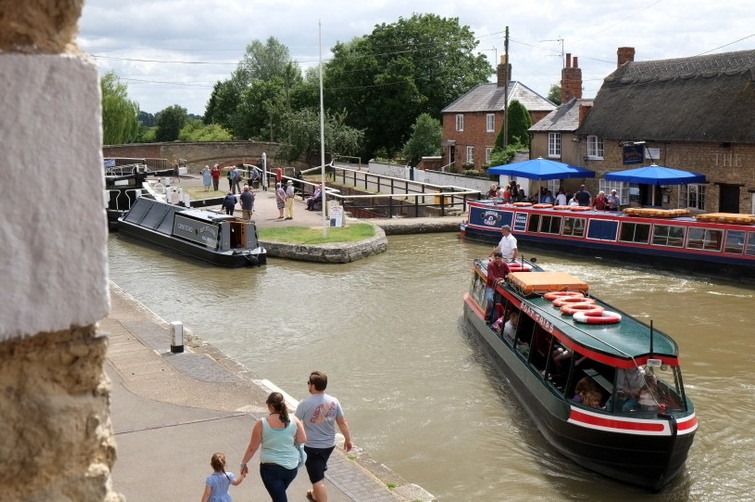
Stoke BruerneStoke Bruerne

Stoke Bruerne Top Lock

The sun duly came out at lunchtime, everywhere got very busy, and the best place to watch the proceedings was from the upstairs door/window of the Canal Museum.

The original plan was possibly to stay in Stoke Bruerne for a day or so before mooring up in Gayton Marina (just up the water at Blisworth Junction) for the annual pilgrimage to Sidmouth. But with all the boats buzzing around, the possible need for a vet, the call of the River Nene, and promise of a decent and inexpensive marina mooring in the middle of Northampton for a couple of weeks, we decided to head off through Blisworth Tunnel, and give us a chance of reaching Northampton the next day.

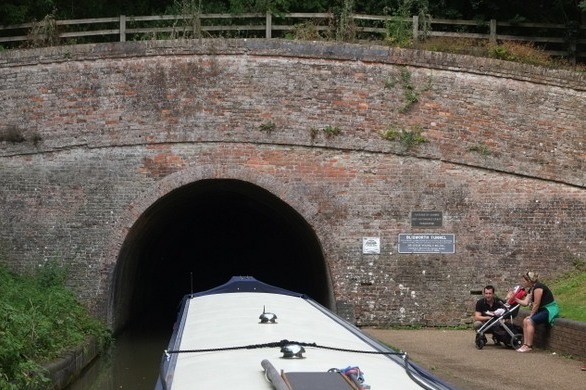
At over 3000 yards, Blisworth Tunnel is third longest useable tunnel on the network, and surprisingly the first real serious tunnel we’d taken Song & Dance through (ignoring a few that were little more than bridges on steroids). Wide enough to allow two narrowboats to pass, it wasn’t as big a challenge to steer the boat through as some though.

Blisworth TunnelBlisworth TunnelBlisworth Tunnel

Biggles was eminently impressed with the moorings in Blisworth, the other side of the tunnel: the towpath runs along a pleasant selection of back gardens with open fences just ripe for him to explore, while we went off to explore the town, and possible land based trips to a vet. Stopping at the pub (surely not!) we bumped into our companions from the morning’s locking exercises: they were looking at mooring up for a week or so at Gayton: we said they could have the space we’d tentatively reserved…

Sunset, Scratches and Another Musician

Late boater

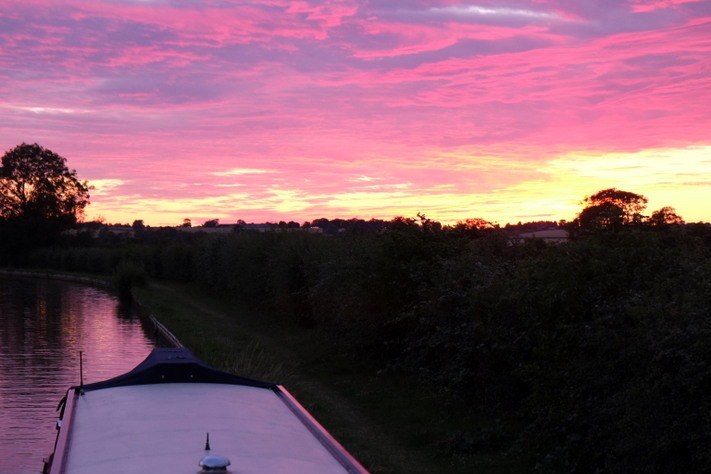
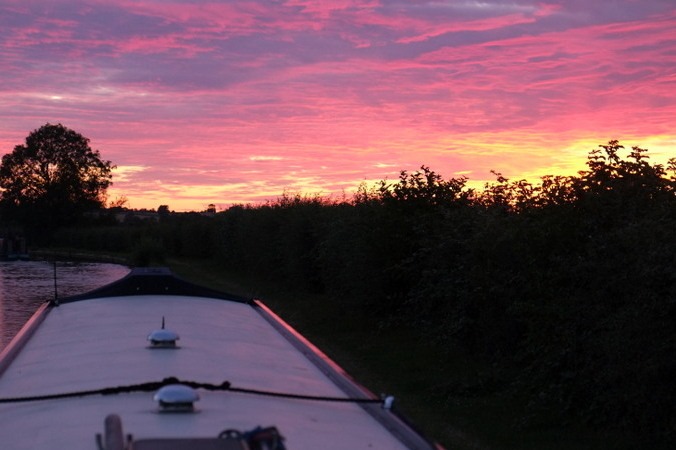
As if the idyllic mooring near Yardley Gobion wasn’t enough, a late boater made us look out the window and find a spectacular sunset.

Sunset near Yardley GobionSunset near Yardley Gobion

But the next morning, the Captain let us know he wasn’t happy (and not just with the weather). He had some unpleasant inflammation and scratches round his ears and forehead, sometimes  a sign that he’d been in a fight. We bathed them with the vet’s answer to Dettol, and – being nowhere near a vet – hoped they would clear up if we kept things clean.

Aiming to reach Stoke Bruerne, we moored up just below the bottom lock of the seven in the early afternoon, walked up into the village in showery and uninspiring weather, somewhat preoccupied with the possibility of needing to find a vet.

Frank's BoatTowcester

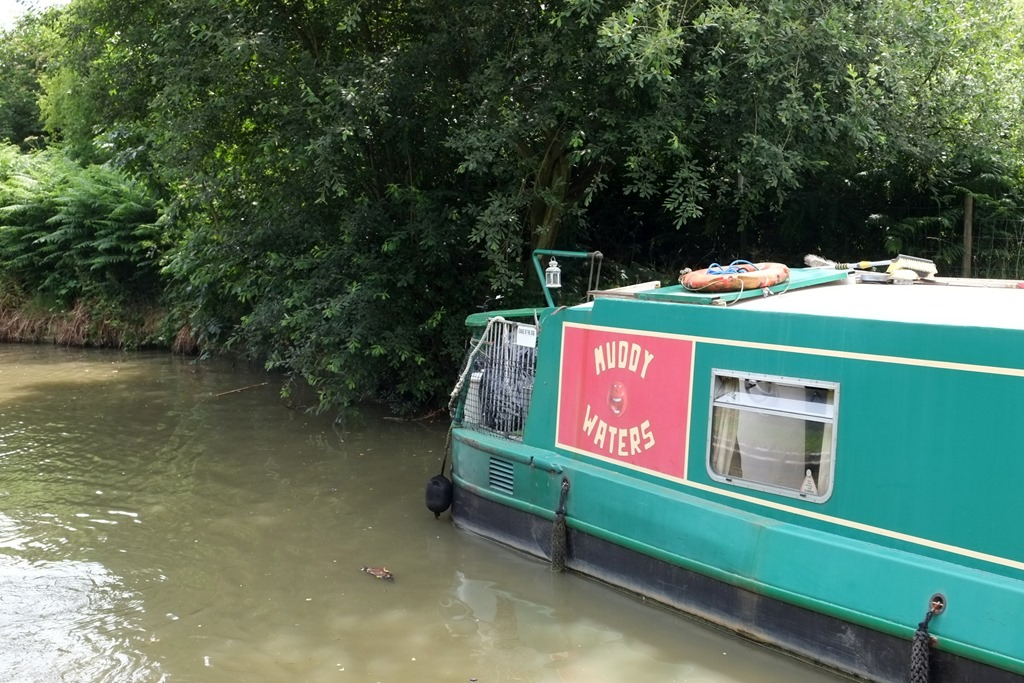
Moored across from us was the splendidly named Zappa – a rather different musician to Muddy Waters – and the puzzling Lactodorum which clearly had something to do with milk. Subsequent investigation suggests it means “Dairyman’s Fort” and was the Roman name for nearby Towcester, where there was a vet if we needed one.

Somewhat preoccupied by the Captain’s difficulties and wondering what there was on the boat for dinner, we passed The Navigation pub, discovered that they were doing two sirloin steak dinners and a half-decent bottle of wine for £20, and decided that would do.

Ley Lines, Cornfields and Flying Buttresses

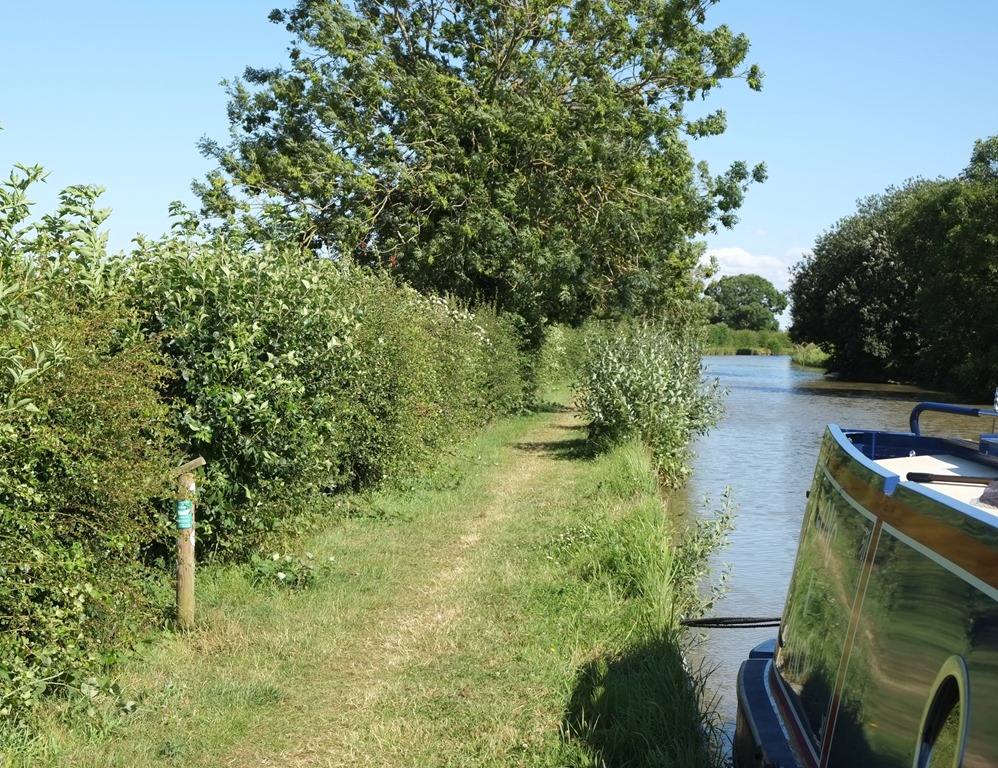
Not far beyond Cosgrove Lock, between Thrupp Wharf and Yardley Gobion Wharf we came across a most pleasant spot to moor for the night, pretty much in the middle of nowhere.

Between Thrupp and Yardley WharvesBetween Thrupp and Yardley Wharves

We were right next to a big cornfield with an intriguing public footpath right through the middle, joining up to the towpath.

Between Thrupp and Yardley Wharves

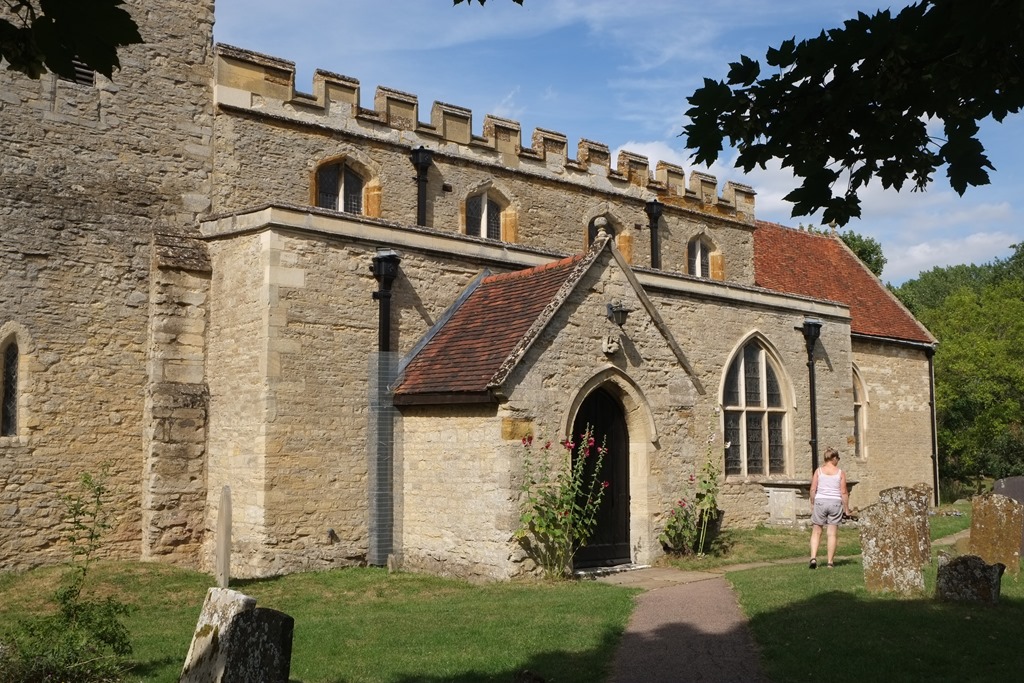
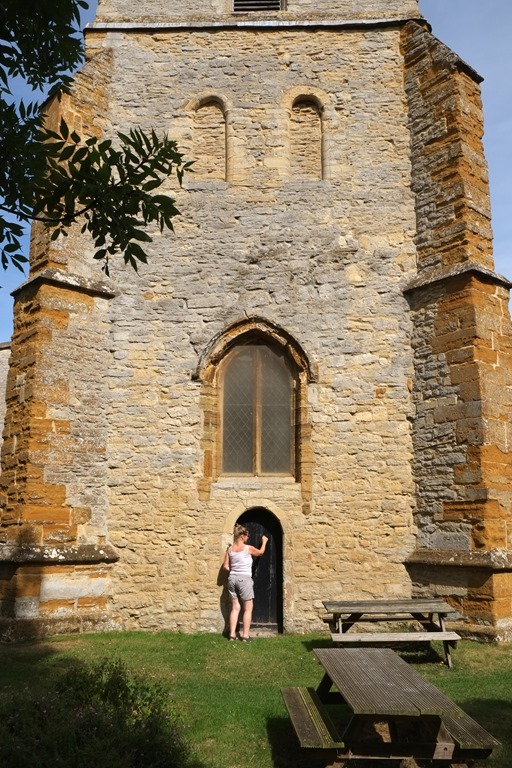
The ground was baked hard, and it wasn’t clear whether the farmer took his public footpath duties very seriously, or the local ramblers association had been establishing their right of way with extreme prejudice. The line of the path pointed unerringly to thespire of St. James the Great at Hanslope, with its impressive flying buttresses. Visible for miles around, it’s also very noticeable from the M1 near Newport Pagnell. So unerringly did it point, we did wonder if the path was part of a ley line, but of course, they don’t really exist.

Biggles heads offDSCF2618

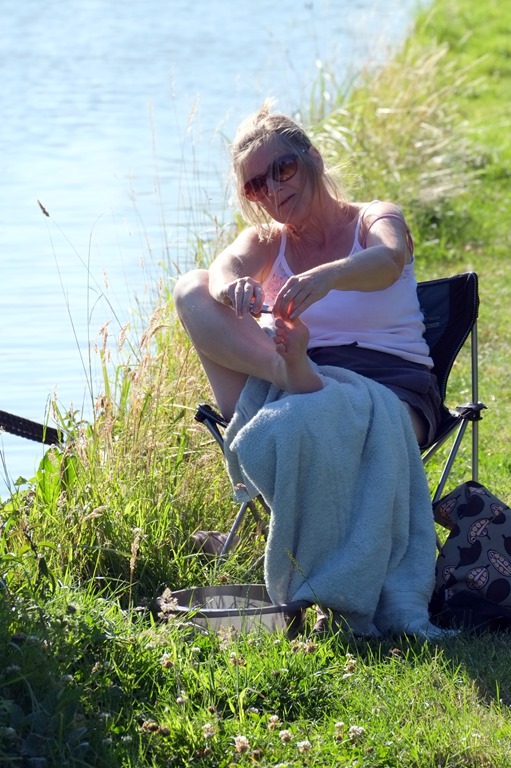
The Captain decided that as it was a Sunday evening, he ought to attend evensong, and set off across the field, while the chief cook decided to indulge in some al-fresco beauty regime or other.

 Al-fresco beauty regime

As the sun went down we walked across the field in the company of hundreds of martins and swallows, skimming low across the corn harvesting the invertebrates. An idyllic evening.

Uphill Again

The 11 mile lock-free pound round Milton Keynes which started at Fenny Stratford comes to an end at Cosgrove Lock, with it’s modest 3’4” rise. En–route one passes over the Great Ouse Aqueduct. Crossing it is reminiscent of the spectacular Pontcysyllte Aqueduct: it’s an iron channel with no protection on one side. But being much shorter, not so high and wide enough for a broad-beam boat (so you don’t have to go quite so close to the edge) it’s rather less terrifying and vertigo inducing for the helmsperson, but still a novel experience.

Great Ouse AqueductGreat Ouse Aqueduct

Approaching Cosgrove Lock

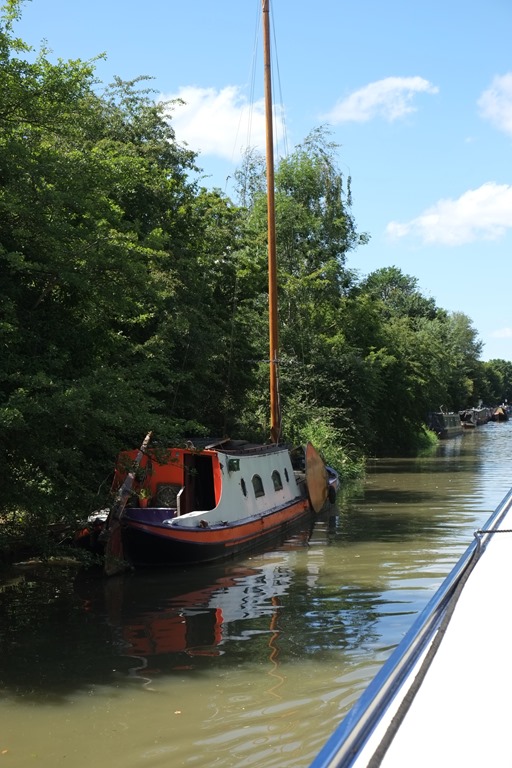
Just past it, coming up to Cosgrove Lock we saw a rather old Dutch sailing Tjalke: not something very common on the canal system!

Soloman's BridgeSoloman's Bridge

And just past the lock is Solomon’s Bridge. A very ornate job, the reason for which is lost in the mists of time, or something.

Great Linford

Just on the way out of MK lies the village of Great Linford, still laid out like the mediaeval village, with the manor house, church, alms-houses and pub all close to hand. A spot on the wharf set us up for a mid-afternoon Guinness, a wander around and dinner at the pub. Sometimes life’s hard.

Great Linford Wharf

The pub from Song & Dance.

Great Linford Alms HousesGreat Linford tourist

The alms-houses.

Entrance for big peopleEntrance for small people

The church, with entrances for large and small people.

Milton Keynes Arts CentreMilton Keynes Arts Centre

The old barns, now Milton Keynes Arts Centre.

Great Linford Manor HouseGreat Linford Manor House

The manor house, under refurbishment. Apparently owned by the chap who’s chairman of the local football team, there’s a recording studio too.

Great LinfordDownhill to the boat

The main street, which passes the pub, and continues on down to the the boat.

A lovely place to while away a sunny Saturday afternoon.

Sign of the Times

The city of Milton Keynes provokes mixed reactions, but as far as we can see the people who actually live there seem to like it a lot. Swallowing up, or surrounding several old villages like Fenny Stratford and Bletchley, it covers a large area; the canal snakes around the Eastern and Northern boundaries with glimpses housing estates or even The Open University,  but it’s pretty much all parks or woods or walking areas along the canal so you never feel you’re close to a big city.

Fenny Stratford Lock

Fenny Stratford provides the last lock on the descent into Milton Keynes and a long lock free pound. The drop is only thirteen inches, and there’s a swing bridge across the middle of the lock: a lot of effort for such a little descent.

You occasionally see people running businesses from boats: we’d already encountered fuel sellers and the honey-cart boat that services the area from Rickmansworth to Milton Keynes. You see boats advertising traditional fenders, a mobile bookshop seemed to make the news recently, tea shops, and all sorts of other types. Some friends of ours who liked making exotic bread had even explored the possibility of a narrowboat bakery, but the logistics proved a little fearsome.   And that morning The Cheese Boat passed us en-route to Leighton Buzzard.

VanitasVanitas

Even so, we were impressed by the striking looking Vanitas: a mobile tattoo parlour and signwriter no less. The Captain suggested we stop and I get some rabbits tattooed on my forehead, in the hope that people might mistake them for hares, but there didn’t appear to be anyone in. The Captain went without lunch.

The Leaving of Linslade

Moored up in pleasant countryside just North of the the urban delights of the Leighton Buzzard/Linslade metropolis, we rued our fate-inviting observation that there was hardly any boat traffic around, as loads of Wyvern boats went steaming past at OMG O’clock, running late for their 9:30 handover. Actually, we must be approaching the school holidays, as quite a few other boats were on the move as well – perhaps heading home for some peace and quiet in August.

Even without that, it’s not exactly quiet, because there’s a long gentle curved three mile stretch of the A4146 between two roundabouts. On exit from said roundabouts, the owners of high-revving powerful motorcycles seem to find it a perfect spot to demonstrate just how amazingly small their penises are. Rudely awoken several more times before elevenses, and with several further demonstrations during the early afternoon, the locals must be a bit fed up with it – even worse than Mr Branson’s Incredibly Noisy Trains.

Setting off, we soon passed The Globe Inn, a well known watering hole, and started running alongside the railway again. And speaking of trains, this stretch, through what was quiet countryside then, received some unwanted publicity back in 1963.

Globe Inn

The low point of this section of the Grand Union is Milton Keynes (no jokes necessary ), but before reaching it (is it called the bottom pound?) there were still a few locks to go, including Soulbury Three Locks. Maybe it was the proximity to transport, but all of a sudden we had a lot more boats moored up on the towpath for the duration: couldn’t see some them moving every two weeks.

Continuous Moorers?Sunken Cruiser

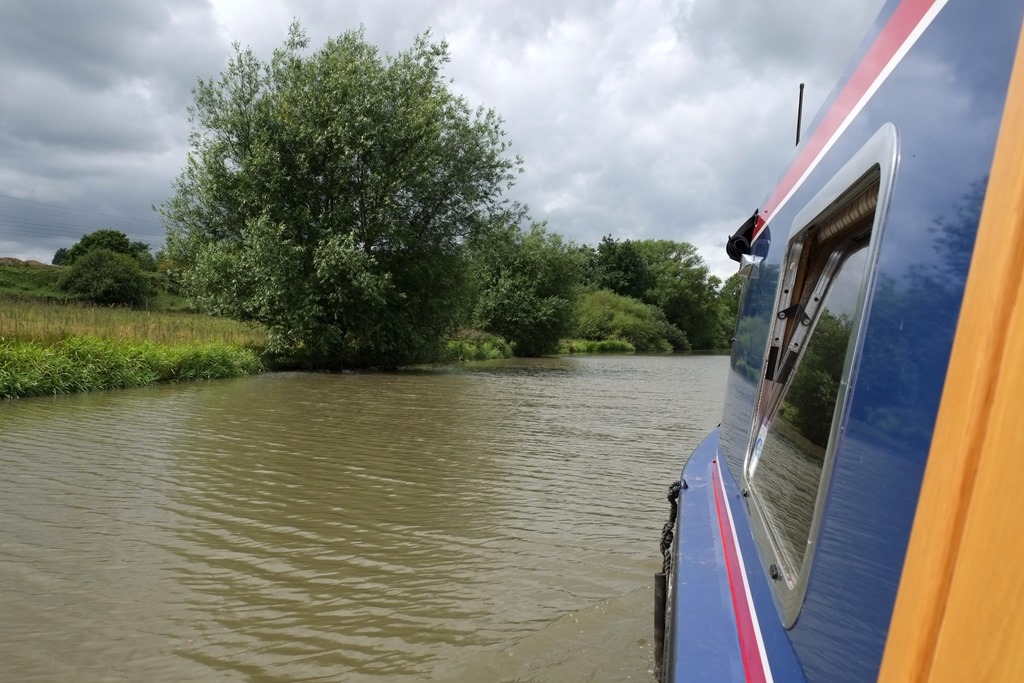
The canal widens out and becomes almost river-like for a while, but while we suspect that Muddy Waters was named in honour of that legendary bluesman McKinley Morganfield, it was kind of appropriate here too, especially as the pound was a bit low.

Grand Union River?Grand Union River?Muddy Waters

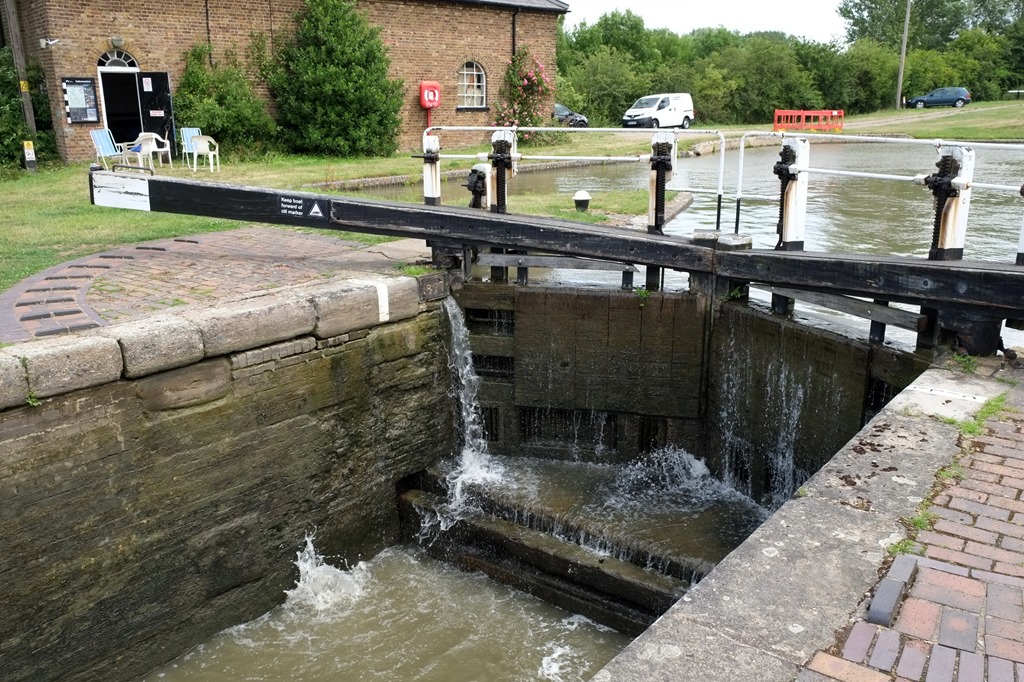
At Soulbury Three Locks, there were some CaRT volunteers actively trying to manage the traffic into sharing locks to preserve water (but fortunately still no mention of the R Word); it was certainly pouring all over some of the top gates.

Soulbury Three LocksSoulbury Three Locks

We can understand why some boaters clutter up their roof with supplies of wood, coal, bicycles and the likes, but one of the things that constantly amazes us is the number of boats looking more like waterborne Rag & Bone carts, carrying every imaginable piece of scrap wood as well as all sorts of rubbish of little conceivable use. Sort of mobile landfill sites, really: a couple of (relatively tame and tidy)examples passed through while we partook of lunch at the conveniently situated but oddly named pub The Three Locks.

RA-Bone... RA-Bone...

Rather delayed, we ended up passing through Stoke Hammond lock and, needing milk, called it a day and wandered into the village for supplies. Only one lock to go to the bottom pound and the delights of MK, but still within earshot of the minimally endowed motorcyclists, sadly.

The Other Kind of Buzzard

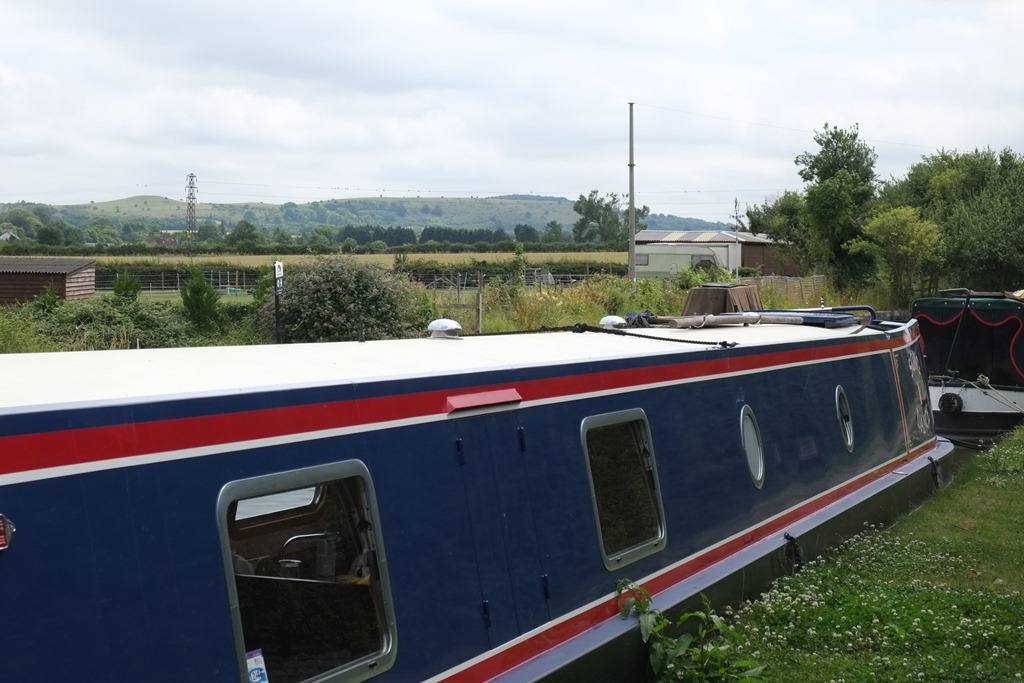
Climbing up to the Aylesbury Arm junction, then starting back on the descent, Tuesday saw 13 locks pass slowly: quite enough. The journey is quite pleasant, with views across the Chilterns to Dunstable Downs and the like.

Dunstable DownsSweet Painted Lady

The rather fine paintwork on Sweet Painted Lady was reminiscent of the old WWII Bomber nose art, particularly given the old Airstream caravan parked in the field.

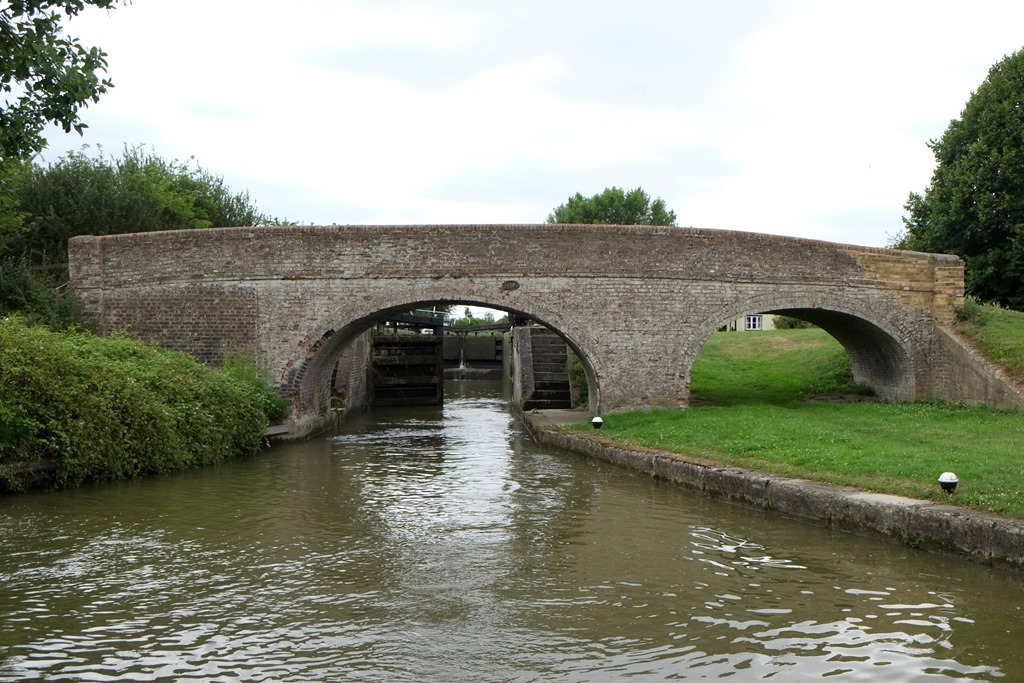
Water had always been a consideration around here, and at several places the canal company built a second, parallel narrow beam lock, partly to improve traffic flow, but mainly so that solo narrowboats didn’t waste as much water. The locks are long disused, but the double-arched bridges are still there.

Double lock bridge

With the slowly increasing distances between locks as we come off the hill, the Chief Engineering Officer had time to think, and was getting concerned that we needed an engine service and oil change. A phone call down canal to Wyvern Boats – the local hire company – established that they had the bits and would be happy to accommodate us as long as it wasn’t one of their change-over days, so we arranged to slow down, and arrive at their wharf mid-morning on the Thursday for a few hours engineering TLC and thumb-twiddling.

Stopping the previous evening near Grove Lock, where there’s a pleasant Fuller’s pub serving food, it was clear that CaRT’s towpath maintenance had gone awry. We got moored up eventually, but with all the gardening required forgot to take any pictures.

Memo to Captain: we need a few extra items for the ship’s inventory, sir. 1 scythe, 1 strimmer, 1 pair of shears, 1 flamethrower…

Wyvern Boats

Since leaving Cropredy (at what seems a very long time ago) we’d seen very little boating traffic apart from sunny weekend cruisers on the Thames and the occasional travellers like us. As it was now mid-July, some schools were already out, and Wyvern had quite a few boats gathering dust on the wharf we wondered if the hire boat industry was in terminal decline. But no. Wyvern said they had 35 boats, so there were about 25 out, and nearly all their customers headed North as there were so many locks heading South (as we knew!)

Wyvern’s wharf is pretty much in the middle of Leighton Buzzard, and with ten or more boats expected to arrive the next morning long before the Captain and Cook normally stir themselves, after a wander round town and checking out the cook’s favourite supermarket, we beat a hasty retreat a little down the canal to somewhere likely to be less chaotic.

Water Water Everywhere…

… or nearly so. The locks of most of the canals we’ve travelled in the past have by-washes, so that if the pound above the lock has too much water, it flows down a culvert or channel around the lock into the pound below. Coming up the Grand Union from Brentford, and compounded by rivers joining and departing the navigation, several times we found water overflowing the lock gates. There’s a picture here.

In some cases the “bible” (Nicholson’s Guide) advises against mooring in certain pounds due to highly variable water levels. We’d avoided one such pound coming up to the summit, mooring a couple of pounds below, only to find the next morning we were thoroughly aground, and tilting over enough that the shower water didn’t stay in in the shower tray. With some pre-breakfast cursing and swearing, and the first ever use of the Song & Dance barge pole in anger we got waterborne and made it to the next lock. Dragged our bottom all through next pound, only to find that the following one – the one with the caution – had several moorers still afloat, plenty of water and no problems. Oh well…

The lockkeeper at Aylesbury also warned things were getting a bit difficult on the main line, as one of the back-pumping systems had gone U-S, and warned us about mooring in several other places too. But heading back up from Aylesbury, again we found plenty of overflowing water, apart from one pound where again we were dragging the bottom and were quite relieved to reach the lock at the end. (We subsequently found this pound had sprung a leak somewhere).

Coming back down the main line again, again there have been several pounds where the levels looked a little low, but not enough to cause concern. Fingers crossed there’s enough water to get us where we going…

Slow Exit From Aylesbury

It’s all very well mooring next to a Waitrose – you can get fresh croissants for breakfast – but when you lose track of the days and find (a) it’s Sunday, (b) they don’t open until 11:00 and (c) the weather is inclement, then the promised early start never happened, and we didn’t get off until after lunch. Much the same happened the next day, so we had plenty of time to reflect on the Aylesbury Arm of the Grand Union.

It descends/climbs through pleasantly remote countryside, but it’s not that quiet: there are loads of old narrow canal bridges carrying roads across: they’re all little country lanes, but with relatively lots of traffic, so being anywhere near a bridge means being subject to a fairly constant barrage of “beep beep beep”s from vehicles going too fast and adopting the Italian approach to collision avoidance on hump-backed bridges. And due to the wonders of SatNavs and lorry drivers too mean to buy the more expensive commercial versions, watching a 44 tonne artic trying to negotiate a small brick bridge that’s hundreds of years old makes you wonder why there are no obvious weight restrictions, and glad you aren’t underneath at the time.

The (many) locks are a bit neglected, too. The grass areas around the lock are rough, untended, and present plenty of tripping risks, while the concrete or brick edges to the lock are pretty rough and crumbling, and in some cases seem to be coming away altogether. This happened a couple of years ago at Lock 12 when the lock wall collapsed completely, resulting in the arm being shut for months; CaRT had to crane out quite a few boats stick between there and the town as there was no other way out. One local retailer remarked that boat traffic has never recovered on that section: one can see why.

So, in iffy weather, we slowly climbed our way back up to the main line, then resumed our descent off the Chilterns.